


Read & explore together
Judgment before the Great White Throne
This vision shows judgment before a great white throne. Its vivid images highlight the authority of the throne scene, the opening of books, and the seriousness of every person standing before the throne.
Understanding the passage
The setting of this message
In these verses, John reports what he saw: a great white throne, the dead standing before it, books being opened, and judgment taking place. The passage remains a vision scene and explains key images such as the book of life and the second death.
Revelation 20:11–15Main takeaway
This vision presents judgment before the throne as universal, personal, and deeply serious.
Explore the message
Open a card to explore the full explanation and its Bible references.
01A great white throne appearsJohn says, “I saw a great white throne and him who sat on it”. The throne points to rule and judgment.
Explanation
John says, “I saw a great white throne and him who sat on it”. The throne points to rule and judgment. The earth and the sky flee from his face, and “no place” is found for them. This gives the vision a vast scale and an overwhelming sense of authority.
02The dead stand before the throneJohn sees “the dead, the great and the small”, standing before the throne. People of every size or status are included.
Explanation
John sees “the dead, the great and the small”, standing before the throne. People of every size or status are included. “Books” are opened, and then “another book” is opened, called the book of life. The dead are judged from the things written in the books, “according to their works”.
03No one remains hiddenThe sea gives up the dead in it, and Death and Hades give up the dead in them. The vision shows that no dead person is outside this judgment scene.
Explanation
The sea gives up the dead in it, and Death and Hades give up the dead in them. The vision shows that no dead person is outside this judgment scene. The repeated phrase “each one according to his works” makes the judgment both individual and complete.
04The second death is namedDeath and Hades are thrown into the lake of fire. The passage explains this image directly: “This is the second death, the lake of fire.”
Explanation
Death and Hades are thrown into the lake of fire. The passage explains this image directly: “This is the second death, the lake of fire.” Then it says that anyone not found written in the book of life is cast into the lake of fire. The ending is solemn and weighty.
Questions to explore
Pause, look back at the verses and talk together.
01What details in this vision make the throne scene feel weighty and overwhelming?
Notice the “great white throne” and the way earth and sky flee, with no place found for them.
02What does the passage say about the books and the book of life?
The text says the dead are judged by the things written in the books according to their works, while another book is named separately as the book of life.
03How does the vision show that no dead person is missing from this judgment?
Look at the way the sea, Death, and Hades all give up the dead who are in them.
Read the Bible passage
World English Bible ClassicScripture quotation · Public domain
Revelation 20:11–15
11I saw a great white throne and him who sat on it, from whose face the earth and the sky fled away. There was found no place for them.
12I saw the dead, the great and the small, standing before the throne, and they opened books. Another book was opened, which is the book of life. The dead were judged out of the things which were written in the books, according to their works.
13The sea gave up the dead who were in it. Death and Hades gave up the dead who were in them. They were judged, each one according to his works.
14Death and Hades were thrown into the lake of fire. This is the second death, the lake of fire.
15If anyone was not found written in the book of life, he was cast into the lake of fire.
Source passages
Source: Revelation 20 ↗Keep exploring together
Lessons and activities connected with this reading.
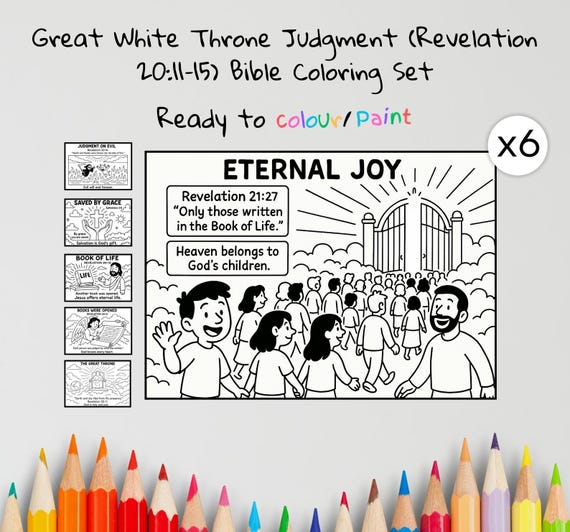
Great White Throne Bible Colouring Pages
Bible colouring pages
View activity →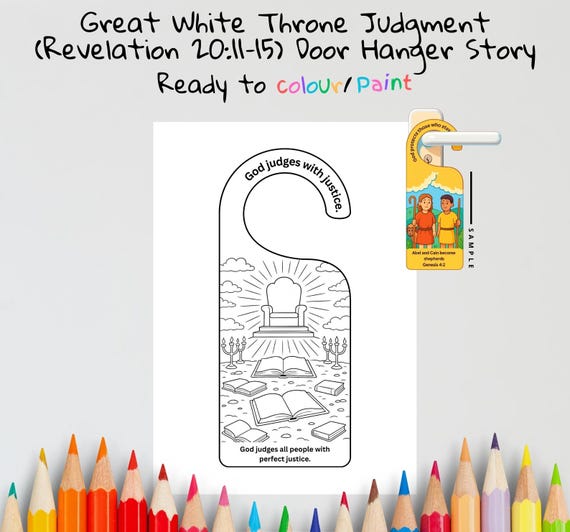
Great White Throne Bible Door Hanger
Bible door hanger
View activity →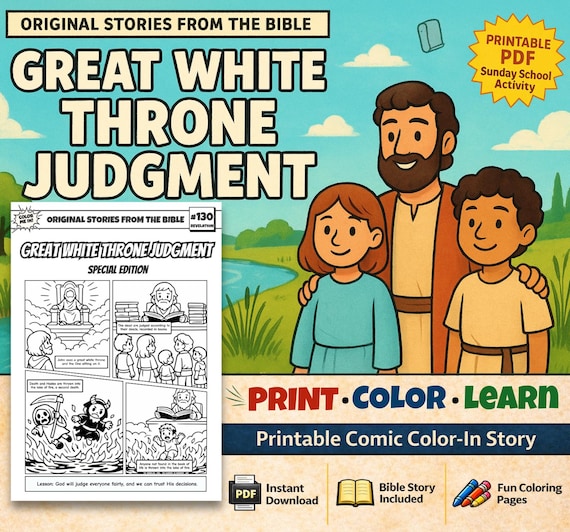
Great White Throne Judgment Bible Comic Colouring Page for Kids
Bible comic colouring page
View activity →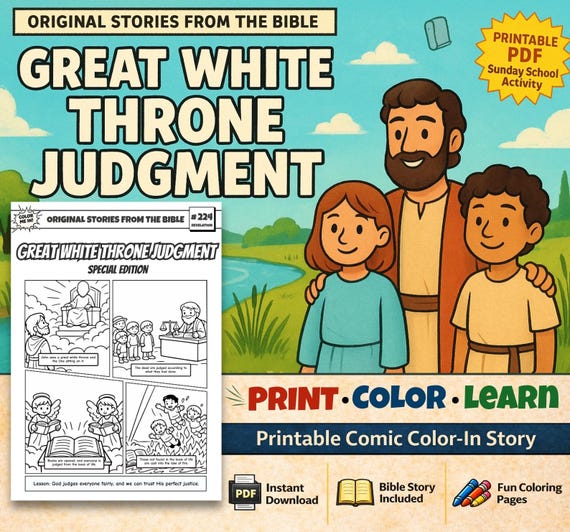
Great White Throne Judgment Bible Comic Colouring Page for Kids
Bible comic colouring page
View activity →