


Read & explore together
The Burden against Damascus
Isaiah 17:1–14 speaks a burden against Damascus, but the passage also includes Ephraim, Jacob and many nations. It moves from coming ruin, to a small remnant left behind, to a call to look to God instead of human-made worship.
Understanding the passage
The setting of this message
In this passage, Isaiah announces that Damascus will become a ruin and that Ephraim’s strength will cease. He then describes Jacob becoming thin, with only gleanings left, before saying that people will look to their Maker. The passage ends with noisy nations being rebuked by God and disappearing quickly.
Isaiah 17:1–14Main takeaway
This prophecy teaches that human strength and human-made worship fail, but the Holy One of Israel remains the one people must look to.
Explore the message
Open a card to explore the full explanation and its Bible references.
01A burden against Damascus and EphraimThe passage opens with a heavy announcement: Damascus will no longer be a city but a ruinous heap.
Explanation
The passage opens with a heavy announcement: Damascus will no longer be a city but a ruinous heap. Nearby places are described as forsaken, and Ephraim loses its fortress while Damascus loses its kingdom. The prophecy joins these losses together and places them under the word of Yahweh of Armies.
02Jacob made thin, yet not completely goneThe focus then turns to Jacob. Its glory becomes thin and lean, like a harvested field after reaping.
Explanation
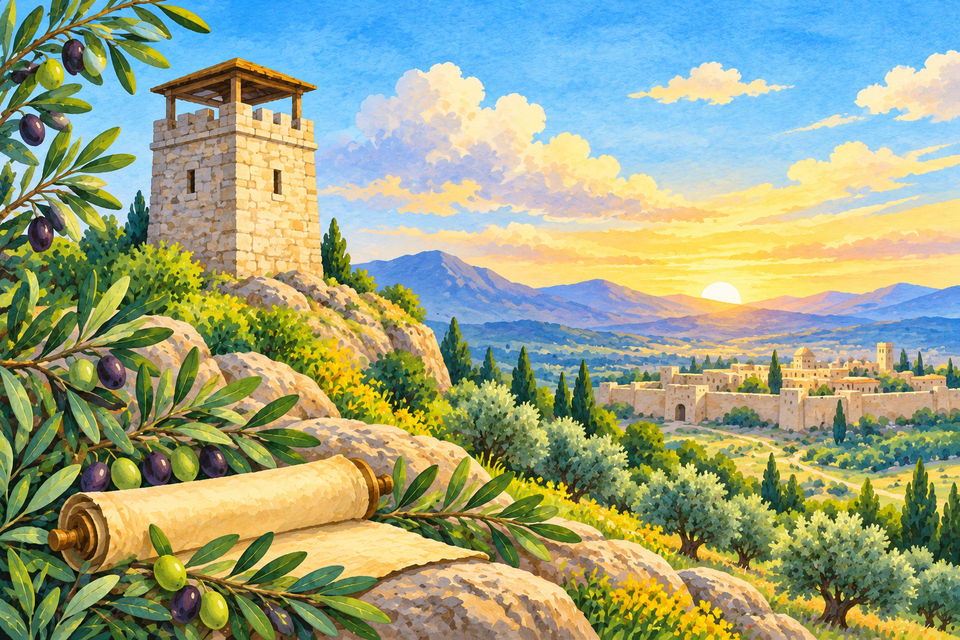
The focus then turns to Jacob. Its glory becomes thin and lean, like a harvested field after reaping. Yet the picture is not total removal. Isaiah compares what remains to a few olives left on the tree after shaking. The image suggests severe loss, but also a small remnant left behind.
03Looking to the Maker instead of idolsIn that day, people will look to their Maker and respect the Holy One of Israel. This change is shown by contrast: they will no longer look to altars, Asherah poles, or incense altars made by human hands.
Explanation
In that day, people will look to their Maker and respect the Holy One of Israel. This change is shown by contrast: they will no longer look to altars, Asherah poles, or incense altars made by human hands. The passage identifies false worship as something people made for themselves.
04Forgotten God and failing harvestsThe desolation of strong cities is linked to a reason. The people forgot the God of their salvation and did not remember the rock of their strength.
Explanation
The desolation of strong cities is linked to a reason. The people forgot the God of their salvation and did not remember the rock of their strength. They may carefully plant and tend pleasant plants, but the harvest escapes in grief and desperate sorrow. Their effort cannot secure the outcome.
05Roaring nations and God's rebukeThe final verses describe many peoples like roaring seas and rushing waters. Their noise sounds powerful, but God rebukes them and they flee like chaff and whirling dust.
Explanation
The final verses describe many peoples like roaring seas and rushing waters. Their noise sounds powerful, but God rebukes them and they flee like chaff and whirling dust. Evening brings terror, yet before morning they are gone. Those who plunder and rob do not keep the final word.
Questions to explore
Pause, look back at the verses and talk together.
01What pictures does Isaiah use to show both heavy loss and a small remainder?
Notice the harvested field and the few olives left on the tree, which together show judgement but not complete disappearance.
02According to the passage, what changes when people look to their Maker?
Compare looking to the Holy One of Israel with no longer looking to altars, Asherah poles and incense altars made by human hands.
03Why does the passage say the harvest fails, even after careful planting?
Look for the stated reason in the text: forgetting the God of salvation and not remembering the rock of strength.
Read the Bible passage
World English Bible ClassicScripture quotation · Public domain
Isaiah 17:1–14
1The burden of Damascus. “Behold, Damascus is taken away from being a city, and it will be a ruinous heap.
2The cities of Aroer are forsaken. They will be for flocks, which shall lie down, and no one shall make them afraid.
3The fortress shall cease from Ephraim, and the kingdom from Damascus, and the remnant of Syria. They will be as the glory of the children of Israel,” says Yahweh of Armies.
4“It will happen in that day that the glory of Jacob will be made thin, and the fatness of his flesh will become lean.
5It will be like when the harvester gathers the wheat, and his arm reaps the grain. Yes, it will be like when one gleans grain in the valley of Rephaim.
6Yet gleanings will be left there, like the shaking of an olive tree, two or three olives in the top of the uppermost bough, four or five in the outermost branches of a fruitful tree,” says Yahweh, the God of Israel.
7In that day, people will look to their Maker, and their eyes will have respect for the Holy One of Israel.
8They will not look to the altars, the work of their hands; neither shall they respect that which their fingers have made, either the Asherah poles or the incense altars.
9In that day, their strong cities will be like the forsaken places in the woods and on the mountain top, which were forsaken from before the children of Israel; and it will be a desolation.
10For you have forgotten the God of your salvation, and have not remembered the rock of your strength. Therefore you plant pleasant plants, and set out foreign seedlings.
11In the day of your planting, you hedge it in. In the morning, you make your seed blossom, but the harvest flees away in the day of grief and of desperate sorrow.
12Ah, the uproar of many peoples who roar like the roaring of the seas; and the rushing of nations that rush like the rushing of mighty waters!
13The nations will rush like the rushing of many waters, but he will rebuke them, and they will flee far off, and will be chased like the chaff of the mountains before the wind, and like the whirling dust before the storm.
14At evening, behold, terror! Before the morning, they are no more. This is the portion of those who plunder us, and the lot of those who rob us.