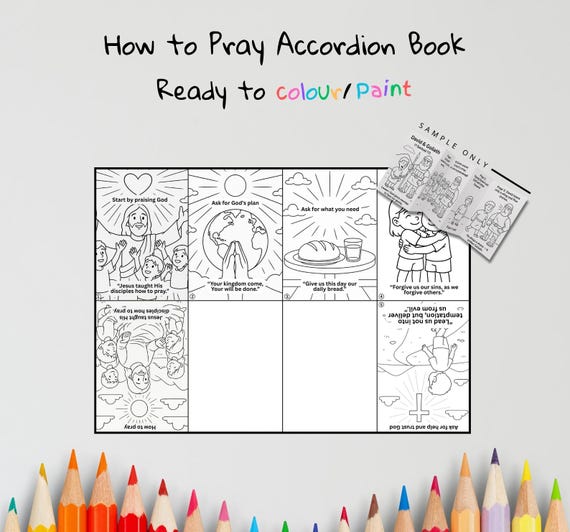
Read & explore together
The Lord's Prayer
Jesus teaches prayer in Matthew and Luke with closely related words in distinct settings. Matthew includes warnings about showy prayer and a strong explanation about forgiveness. Luke begins with a disciple’s request, then later returns to prayer with encouragement to keep asking.

Understanding the passage
One prayer, different settings
In Matthew 6:5-15, Jesus contrasts prayer done for human attention with prayer directed to the Father, then gives a pattern for prayer and explains forgiveness. In Luke 11:1-4, a disciple asks Jesus to teach them to pray. In Luke 11:9-13, Jesus later continues teaching about prayer by urging people to ask, seek, and knock.
Matthew 6:5–15; Luke 11:1–4; Luke 11:9–13Main takeaway
Jesus teaches prayer that turns to the Father with reverence, dependence, forgiveness, and steady trust.
Explore Jesus’ teaching on prayer
Open a card to explore the full explanation and its Bible references.
01Matthew: prayer is for the Father, not an audienceJesus first warns against praying like hypocrites who want to be seen in synagogues and street corners.
Explanation
Jesus first warns against praying like hypocrites who want to be seen in synagogues and street corners. Their reward is human notice. Instead, he tells a person to pray privately to the Father who is in secret. He also rejects empty repetition, because the Father already knows what is needed before he is asked.
02Matthew: the prayer begins with God’s name, kingdom, and willJesus says, “Pray like this”, then begins with the Father in heaven. The first requests are centred on God: that his name be kept holy, that his kingdom come, and that his will be done on earth as it is in heaven.
Explanation
Jesus says, “Pray like this”, then begins with the Father in heaven. The first requests are centred on God: that his name be kept holy, that his kingdom come, and that his will be done on earth as it is in heaven. Prayer starts with who God is and what God desires.
03Matthew: daily needs, forgiveness, and deliveranceThe prayer then brings ordinary and spiritual needs to God. It asks for daily bread, for forgiveness of debts, and for help regarding temptation and the evil one.
Explanation
The prayer then brings ordinary and spiritual needs to God. It asks for daily bread, for forgiveness of debts, and for help regarding temptation and the evil one. Afterward Jesus explains forgiveness more directly, showing that asking for forgiveness is closely joined to forgiving others.
04Luke: a disciple asks to be taught to prayLuke keeps a different setting. Jesus has been praying, and a disciple asks, “Lord, teach us to pray.”
Explanation
Luke keeps a different setting. Jesus has been praying, and a disciple asks, “Lord, teach us to pray.” Jesus then gives the prayer with wording that closely matches Matthew: the Father, God’s holy name, God’s kingdom, daily bread day by day, forgiveness, and protection in temptation.
05Luke: keep asking, seeking, and knockingLater in Luke 11, Jesus urges persistence in prayer with three repeated actions: ask, seek, knock.
Explanation
Later in Luke 11, Jesus urges persistence in prayer with three repeated actions: ask, seek, knock. He then compares earthly fathers, who do not swap food for harmful things, with the heavenly Father. The point is confidence in God’s giving, especially that the Father gives the Holy Spirit to those who ask.
Read Matthew and Luke together
Notice the setting and wording of each account.
Scroll across to compare the readings.
| Look closely | Matthew 6 | Luke 11 |
|---|---|---|
| Setting | Jesus contrasts prayer for human attention with prayer to the Father. | A disciple asks Jesus to teach them to pray. |
| God’s name and kingdom | The prayer begins with the Father, his holy name, kingdom and will. | The prayer also begins with the Father, God’s holy name and kingdom. |
| Daily needs and forgiveness | Daily bread, forgiveness of debts and deliverance are brought to God. | Daily bread day by day, forgiveness and protection in temptation are requested. |
| Teaching alongside the prayer | Jesus goes on to explain the importance of forgiving others. | Later in the chapter, Jesus encourages asking, seeking and knocking. |
Questions to explore
Pause, look back at the verses and talk together.
01In Matthew, what does Jesus say is wrong with prayer meant to be noticed by other people?
Compare the people who pray to be seen with the person who prays to the Father in secret.
02How do Matthew and Luke both show that this prayer includes both God’s honour and our needs?
List the requests about God’s name, kingdom, and will, then the requests about bread, forgiveness, and temptation.
03What reason does Luke 11:11-13 give for continuing to ask God in prayer?
Notice the comparison between human fathers giving fitting food and the heavenly Father giving good gifts, especially the Holy Spirit.
Read the Bible passages
World English Bible ClassicScripture quotation · Public domain
Matthew 6:5–15
5“When you pray, you shall not be as the hypocrites, for they love to stand and pray in the synagogues and in the corners of the streets, that they may be seen by men. Most certainly, I tell you, they have received their reward.
6But you, when you pray, enter into your inner room, and having shut your door, pray to your Father who is in secret; and your Father who sees in secret will reward you openly.
7In praying, don’t use vain repetitions as the Gentiles do; for they think that they will be heard for their much speaking.
8Therefore don’t be like them, for your Father knows what things you need before you ask him.
9Pray like this: “ ‘Our Father in heaven, may your name be kept holy.
10Let your Kingdom come. Let your will be done on earth as it is in heaven.
11Give us today our daily bread.
12Forgive us our debts, as we also forgive our debtors.
13Bring us not into temptation, but deliver us from the evil one. For yours is the Kingdom, the power, and the glory forever. Amen.’
14“For if you forgive men their trespasses, your heavenly Father will also forgive you.
15But if you don’t forgive men their trespasses, neither will your Father forgive your trespasses.
Luke 11:1–4
1When he finished praying in a certain place, one of his disciples said to him, “Lord, teach us to pray, just as John also taught his disciples.”
2He said to them, “When you pray, say, ‘Our Father in heaven, may your name be kept holy. May your Kingdom come. May your will be done on earth, as it is in heaven.
3Give us day by day our daily bread.
4Forgive us our sins, for we ourselves also forgive everyone who is indebted to us. Bring us not into temptation, but deliver us from the evil one.’ ”
Luke 11:9–13
9“I tell you, keep asking, and it will be given you. Keep seeking, and you will find. Keep knocking, and it will be opened to you.
10For everyone who asks receives. He who seeks finds. To him who knocks it will be opened.
11“Which of you fathers, if your son asks for bread, will give him a stone? Or if he asks for a fish, he won’t give him a snake instead of a fish, will he?
12Or if he asks for an egg, he won’t give him a scorpion, will he?
13If you then, being evil, know how to give good gifts to your children, how much more will your heavenly Father give the Holy Spirit to those who ask him?”
Keep exploring together
Lessons and activities connected with this reading.