
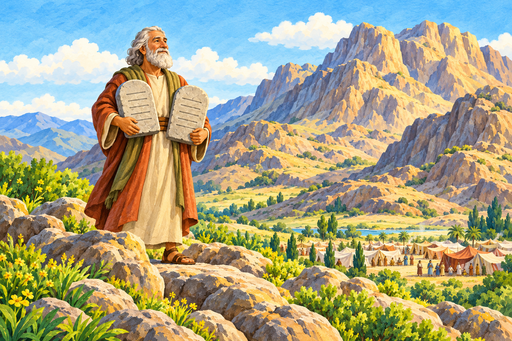


Poetry and prayerPsalms 50:1–23
The Mighty One Calls
Psalm 50 is a poem where God speaks as judge to his own people. It shows his greatness, corrects empty ideas about sacrifice, and warns that worship and daily conduct belong together.
Read & explore together
A little context. A closer look. Something to talk about together.
Explore Scripture through thoughtful guides for families, students and teachers.

232 passages foundPage 4 of 10
Poetry and prayerPsalms 50:1–23
Psalm 50 is a poem where God speaks as judge to his own people. It shows his greatness, corrects empty ideas about sacrifice, and warns that worship and daily conduct belong together.
Poetry and prayerPsalms 51:1–19
Psalm 51 is a prayer-song that asks God for mercy, cleansing and inner renewal. Its poetry speaks honestly about sin and looks toward restored joy, praise and right worship before God.
Poetry and prayerPsalms 52:1–9
Psalm 52 is a song that contrasts two ways to live. One person boasts in evil and uses harmful words.
Poetry and prayerPsalms 53:1–6
Psalm 53 is a song that speaks plainly about denying God, the spread of evil, and the hope that God will save his people.
Poetry and prayerPsalms 54:1–7
Psalm 54 is a short prayer for rescue in trouble. It begins with urgent requests, names the danger, declares trust in God’s help, and ends with thanks for deliverance and triumph.
Poetry and prayerPsalms 55:1–23
Psalm 55 is a prayer from deep distress. In poetic words, the speaker tells God about fear, violence, betrayal by a close friend, and the decision to keep trusting Yahweh.
Poetry and prayerPsalms 56:1–13
Psalm 56 is a prayer-song that moves between fear, pressure and trust. The writer speaks honestly about enemies and danger, while returning again and again to God’s mercy, God’s word and the choice to trust.
Poetry and prayerPsalms 57:1–11
Psalm 57 is a song that moves from urgent mercy to confident praise. The singer speaks honestly about danger, asks God for help, and finishes by lifting God’s glory above the whole earth.
Poetry and prayerPsalms 58:1–11
Psalm 58 is a poem that challenges unjust judges and calls on God to act. It uses strong images to show that human wickedness is real and that God’s judgement over the earth is certain.
Poetry and prayerPsalms 59:1–17
Psalm 59 is a prayer for rescue that speaks plainly about danger, hostile words, and trust in God.
Poetry and prayerPsalms 60:1–12
Psalm 60 is a prayer-song that moves from trouble to hope. It speaks honestly about God’s anger, asks for rescue, repeats God’s own words, and ends by trusting that victory comes through God, not human strength.
Poetry and prayerPsalms 61:1–8
Psalm 61 is a prayer-song that moves from urgent calling out to steady praise. It uses strong pictures like a high rock, a strong tower, a tent, and wings to describe safety with God.
Poetry and prayerPsalms 62:1–12
Psalm 62 is a song about quietly waiting for God in the middle of pressure and false words.
Poetry and prayerPsalms 63:1–11
Psalm 63 is a song of strong desire for God. It uses pictures of thirst, food, night and safety to show that seeking God, remembering him and praising him belong together.
Poetry and prayerPsalms 64:1–10
Psalm 64 is a prayer about cruel speech and hidden wrongdoing. The singer asks God for protection, describes words that wound like weapons, and ends by pointing to God’s justice and the refuge of the righteous.
Poetry and prayerPsalms 65:1–13
Psalm 65 is a song of praise to God. It begins in Zion, then widens to show God hearing prayer, dealing with sin, ruling creation, and filling the earth with joyful abundance.
Poetry and prayerPsalms 66:1–20
Psalm 66 is a song that calls everyone to praise God, then moves from the voice of a gathered people to the voice of one worshipper.
Poetry and prayerPsalms 67:1–7
Psalm 67 is a prayer-song asking God for mercy and blessing, then turning that request outward.
Poetry and prayerPsalms 68:1–35
Psalm 68 is a song that praises God as strong against enemies, kind to vulnerable people, present with his people, and worthy of praise from Israel and the nations.
Poetry and prayerPsalms 69:1–36
Psalm 69 is a prayer-song from overwhelming trouble. The singer uses water and sinking images, speaks about shame and enemies, pleads for God’s rescue, and finally turns toward praise and shared hope.
Poetry and prayerPsalms 70:1–5
Psalm 70 is a short, urgent prayer. It asks God to come quickly, names the shame of enemies, and contrasts them with people who seek God and rejoice in his salvation.
Poetry and prayerPsalms 71:1–24
Psalm 71 is a prayer-song that asks God for rescue and keeps returning to praise. The speaker moves from danger and weakness to confident worship, using pictures like rock, fortress and refuge.
Poetry and prayerPsalms 72:1–20
Psalm 72 is a prayer-song asking God to give a king justice and righteousness. It describes the kind of rule that protects the poor, brings peace, and leads to praise for God, who alone does marvellous deeds.
Poetry and prayerPsalms 73:1–28
Psalm 73 is a song about a hard question: why do wicked people seem to do well? The writer begins with God’s goodness, admits envy, and then explains how his understanding changed.