Paula
Originally posted on Etsy ↗We have enjoyed making these.


Find a story, Bible book or passage.
Some familiar stories
See all Bible stories
Sign in to keep your purchases and downloads together.

Keep the ones you’d like to try.
View saved activitiesTap a heart while you browse. Saved on this device.

Buy as a guest, or sign in to keep your downloads together.
We’ll add a step-by-step demonstration here.
Photos from the Etsy listing. View original Etsy listing ↗
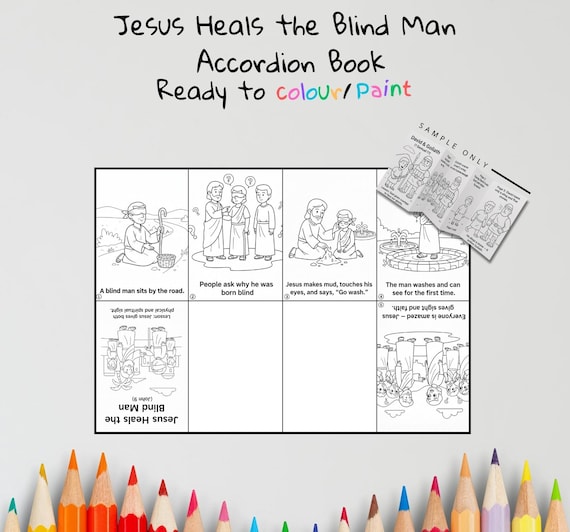
Bible sequencing craft
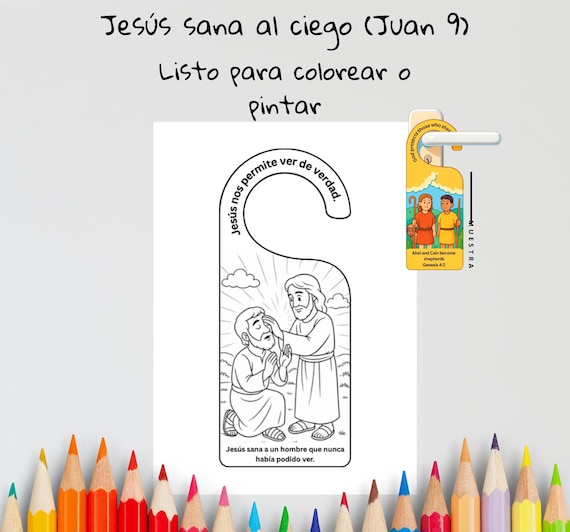
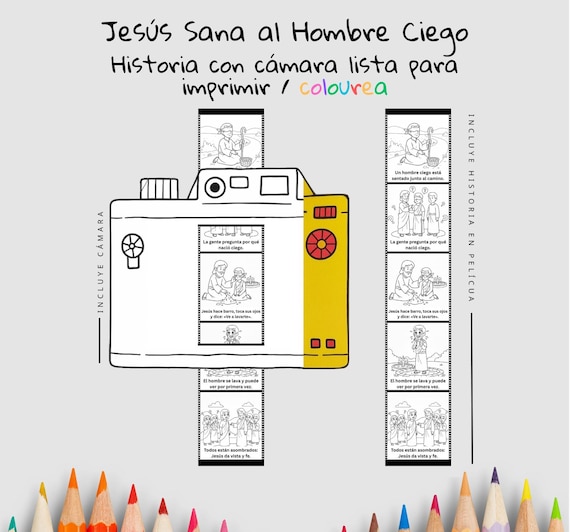
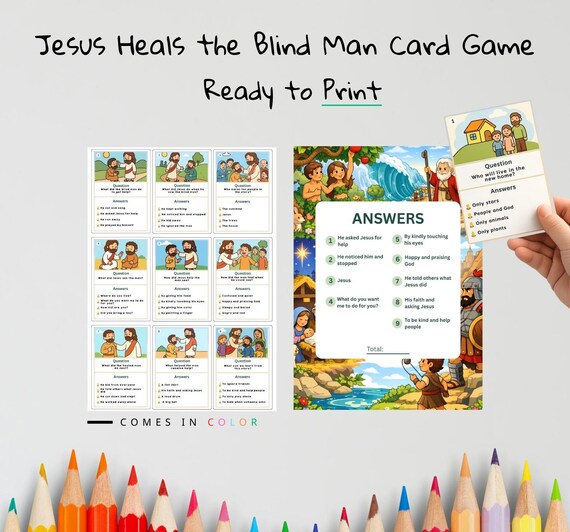
A printable Bible sequencing craft based on Jesus Heals the Blind Man. Children colour and fold the illustrated sections to retell the events in order. Story focus: A blind man sits by the road. Jesus makes mud, touches his eyes, and says, “Go wash.” Everyone is amazed. Jesus gives sight and faith.
English
Age, time and difficulty are planning guides. Check the preparation notes for adult help.
$4.15 USD
One-time purchase
Digital download · No physical item shipped
File inventory and page counts checked against the originals. Page counts include any instruction pages. Please check the preparation notes before printing for a group.
Children need to follow the pictured events and make the folds used to retell them.
Prepare awkward cuts, demonstrate the folds and read captions aloud. Use the pictures for shared retelling.
Printer, paper, colouring pencils or crayons, scissors. Glue or tape may be useful if separate sections need joining.
One sequencing craft, including colouring and folding. Discussion time is additional.
Age is an editorial estimate for the motor and reading demands of this format. Difficulty, completion time and suggested tools are planning estimates, not build-tested.
Check the file before you print for a group, and allow for any extra help the kids might need.
Printing tipsBible passage: John 9:1–12, 35–38
Jesus meets a man who has been blind from birth. He rejects the assumption that the blindness is punishment for someone’s sin, gives the man an instruction to wash, and later speaks with him about belief.
Main takeaway: Jesus refuses blame and treats the man as a person whose story matters.
Read the story sections before attaching them, then use the finished sequence to explain what changes.
Follow the mud, washing and changed sight, but also read Jesus’ answer about blame. Do not equate disability with a lack of faith or personal worth.
Younger learners can choose what happens first and next. Older learners can explain why a turning point changes the story.
The download is a 3-page PDF: JesusHealstheBlindMan-Story.pdf. This is the English edition. You print the files yourself; physical supplies are not included.
The supplied instructions show a folding strip attached to a circular cover. Colour and cut the pieces, fold the strip on the marked lines, then glue its top and bottom ends to the cover as indicated. Open it to reveal the story or writing sections; this version does not need a spinner fastener. For a Bible reading to accompany this activity, use John 9:1–12, 35–38.
The original PDF pages are A4 portrait. JesusHealstheBlindMan-Story.pdf: print pages 2, 3 for each learner or group. Page 1 is the assembly guide, which can be shared. Print single-sided. On US Letter paper, select Letter and Fit or shrink to the printable area; the originals are not separate Letter-sized files.
Paper, colouring pencils, scissors and glue. Help make the strip folds and attach the ends without gluing the opening sections shut.
Suggested ages: 6–10 years. Help with the cover cuts, concertina folds and gluing the marked ends. Read the story or writing prompts aloud where needed. Adjust this guide for the child’s reading and making skills.
We have enjoyed making these.