Single lesson
Amos 8: The Basket of Summer Fruit
Amos 8:1–14
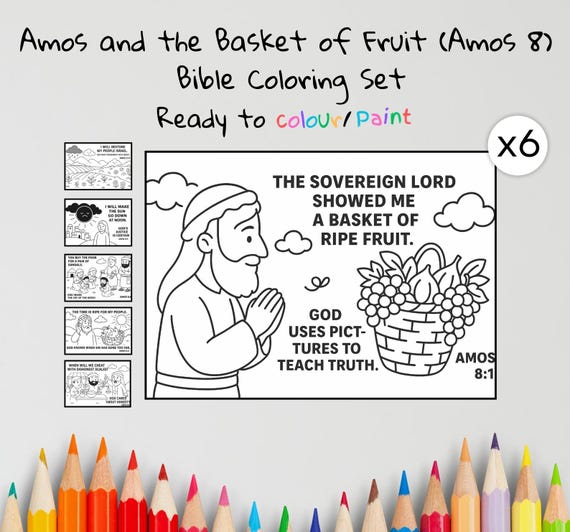
Amos 8:1–14 uses a simple picture, a basket of summer fruit, to announce that Israel has reached its end. The passage moves from a vision to a direct accusation, then to coming mourning, darkness and a famine of hearing Yahweh’s words.
Before you teach
In this passage, the Lord Yahweh shows Amos a basket of summer fruit and explains its meaning himself. The message is aimed at Israel, especially people who crush the needy, cheat in trade and swear by false worship. The chapter speaks as prophecy and warning, using strong images of judgement and loss.
Explain the central teaching of Amos 8: The Basket of Summer Fruit, using two details from the reading. Amos 8 teaches that Yahweh sees dishonest worship and injustice against the poor, and his judgement includes both outward ruin and the loss of hearing his word.
Welcome: Amos 8: The Basket of Summer Fruit
5 minIntroduce “The Basket of Summer Fruit” and locate Amos 8:1–14. Amos 8 teaches that Yahweh sees dishonest worship and injustice against the poor, and his judgement includes both outward ruin and the loss of hearing his word. Invite each learner to name a detail or question they will listen for.
Amos 8:1, Amos 8:8, Amos 8:14
Read and explain the passage
12 minThe vision is very brief. Amos sees a basket of summer fruit, and Yahweh immediately explains that it points to “the end” for his people Israel. The passage does not leave the symbol open here, because the Lord gives the meaning himself and says he will not “again pass by them any more”.
Because of these works, Yahweh swears he will not forget them. The land will tremble and people will mourn. Temple songs will become wailing, and feasts will become mourning. The images of sackcloth, baldness and grief for an only son show deep public sorrow, not celebration.
The passage ends with people who swear by the sin of Samaria and say, “As your god, Dan, lives,” and, “As the way of Beersheba lives”. Amos 8:14 says that these people “will fall, and never rise up again”. The verse directly places those oaths under Yahweh’s judgement.
Read the selected verses together, pausing at “The Basket of Summer Fruit”. Use the source reading below and check the explanation against the words of the passage.
Amos 8:1, Amos 8:2, Amos 8:3, Amos 8:7, Amos 8:8, Amos 8:10, Amos 8:14
Discuss the details and their meaning
8 minUse the three questions below. Begin with “What does the basket of summer fruit mean in this passage?” and allow time to find the supporting verses. Amos 8 teaches that Yahweh sees dishonest worship and injustice against the poor, and his judgement includes both outward ruin and the loss of hearing his word. Ask learners to explain which details support their answer and to identify a question they would like to explore further.
Amos 8:1, Amos 8:2, Amos 8:5, Amos 8:6, Amos 8:11, Amos 8:12
Make and respond: Vision and message evidence map
12 minWork on “Amos 8: The Basket of Summer Fruit: Vision and message evidence map”. Follow the materials and steps below, using “The Basket of Summer Fruit” as reading headings. Each learner should include at least two accurate details and their verse references. Share one observation from the finished sheet and explain how it connects with the central teaching.
Amos 8:1, Amos 8:8, Amos 8:14
Closing: return to The Basket of Summer Fruit
3 minRevisit Amos 8:1–14. Invite a learner to summarise what the group has learned about The Basket of Summer Fruit and another to support the summary with a verse. Give learners a moment to complete their response sheet. They can share a question or, if appropriate for the group, join the optional prayer.
Amos 8:1, Amos 8:8, Amos 8:14
Questions to explore
What does the basket of summer fruit mean in this passage?
Look at Yahweh’s own explanation rather than guessing from the image alone: he says, “The end has come on my people Israel.”
Amos 8:1, Amos 8:2
Which business practices show how the poor were being wronged?
List the actions named in the text: shrinking the ephah, enlarging the shekel, using deceitful balances, buying the poor for silver and selling sweepings with the wheat.
Amos 8:5, Amos 8:6
What is unusual about the famine in verses 11–12?
The text says it is not a lack of food or water, but a lack of hearing Yahweh’s words, even though people search for them.
Amos 8:11, Amos 8:12
Make, think or respond
Amos 8: The Basket of Summer Fruit: Vision and message evidence map
What you’ll need
- plain paper or card
- pencils or pens
- a Bible or the source reading on this page
Try it together
- Fold a sheet into three panels or draw three columns. Label them “What the passage describes”, “What is explained in the text”, “What question remains”.
- Read Amos 8:1–14. Use “The Basket of Summer Fruit” as your reading headings and add a short quotation or detail with its verse reference to each panel.
- Compare your notes with a partner. Check that every quotation is accurate and every conclusion has support in the passage.
- Circle an explanation the passage itself provides. Leave unexplained details as questions for further reading.
The finished sheet keeps the details of Amos 8: The Basket of Summer Fruit connected to their Bible references and gives the group a way to explain what they noticed.
Adapt for your group
- For learners who need more support, prepare the reading headings “The Basket of Summer Fruit” and let them match short quotations to the correct heading.
- For confident readers, compare two sections of Amos 8:1–14. Ask for a written explanation with two supporting references and one question that the text leaves open.
An optional closing prayer
“God, help us listen carefully as we read Amos 8:1–14. Help us understand what we have read, ask thoughtful questions and respond with care for others. Amen.”
Read the Bible passage World English Bible Classic
Amos 8
1 Thus the Lord Yahweh showed me: behold, a basket of summer fruit.
2 He said, “Amos, what do you see?” I said, “A basket of summer fruit.” Then Yahweh said to me, “The end has come on my people Israel. I will not again pass by them any more.
3 The songs of the temple will be wailing in that day,” says the Lord Yahweh. “The dead bodies will be many. In every place they will throw them out with silence.
4 Hear this, you who desire to swallow up the needy, and cause the poor of the land to fail,
5 saying, ‘When will the new moon be gone, that we may sell grain? And the Sabbath, that we may market wheat, making the ephah small, and the shekel large, and dealing falsely with balances of deceit;
6 that we may buy the poor for silver, and the needy for a pair of sandals, and sell the sweepings with the wheat?’ ”
7 Yahweh has sworn by the pride of Jacob, “Surely I will never forget any of their works.
8 Won’t the land tremble for this, and everyone mourn who dwells in it? Yes, it will rise up wholly like the River; and it will be stirred up and sink again, like the River of Egypt.
9 It will happen in that day,” says the Lord Yahweh, “that I will cause the sun to go down at noon, and I will darken the earth in the clear day.
10 I will turn your feasts into mourning, and all your songs into lamentation; and I will make you wear sackcloth on all your bodies, and baldness on every head. I will make it like the mourning for an only son, and its end like a bitter day.
11 Behold, the days come,” says the Lord Yahweh, “that I will send a famine in the land, not a famine of bread, nor a thirst for water, but of hearing Yahweh’s words.
12 They will wander from sea to sea, and from the north even to the east; they will run back and forth to seek Yahweh’s word, and will not find it.
13 In that day the beautiful virgins and the young men will faint for thirst.
14 Those who swear by the sin of Samaria, and say, ‘As your god, Dan, lives,’ and, ‘As the way of Beersheba lives,’ they will fall, and never rise up again.”
World English Bible Classic. Public domain.
Source passages
Something to make together
These activities connect with the passage. Choose one that suits your group and the time you have.