Single lesson
Elisha and the Widow's Oil
2 Kings 4:1–7
This lesson helps children follow the account of the widow, Elisha, the borrowed containers and the oil. Students will notice the problem, the instructions given, the family’s actions and the outcome described in the passage.
Before you teach
In this passage, a widow cries out to Elisha because her husband has died and a creditor plans to take her two children as slaves. Elisha asks what she has, tells her to borrow many empty containers, and gives instructions about pouring her oil. The passage ends with oil to sell, debt paid and provision for the family.
Students will be able to retell the events of 2 Kings 4:1–7 in order and identify how the widow’s actions led to the outcome described.
Welcome: What happened first?
5 minShow a small bottle or picture of oil and ask children what they notice in the title. Explain that today’s account begins with a serious problem: a woman cries out to Elisha because her husband has died and a creditor is coming for her two children. Tell children they will listen for the order of events and the choices people make.
2 Kings 4:1
Read and explain: The problem and the instructions
8 minRead the passage aloud. Pause at each part: the widow says she has only a pot of oil, Elisha tells her to borrow empty containers from neighbours, not just a few, and to shut the door and pour the oil. Briefly explain that a creditor is someone owed a debt, and containers are jars or vessels for holding liquid.
2 Kings 4:1, 2 Kings 4:2, 2 Kings 4:3, 2 Kings 4:4
Discuss: Choices and outcomes in order
6 minWork through the sequence together. The woman goes, shuts the door on herself and her sons, and pours the oil while the sons bring containers. When there are no more containers, the oil stops. Then she returns to Elisha and receives clear instructions about selling the oil, paying the debt and living on the rest.
2 Kings 4:5, 2 Kings 4:6, 2 Kings 4:7
Make and respond: Jar sequence cards
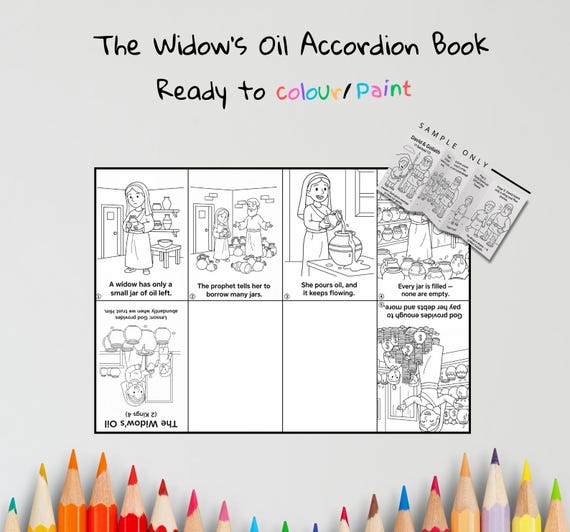
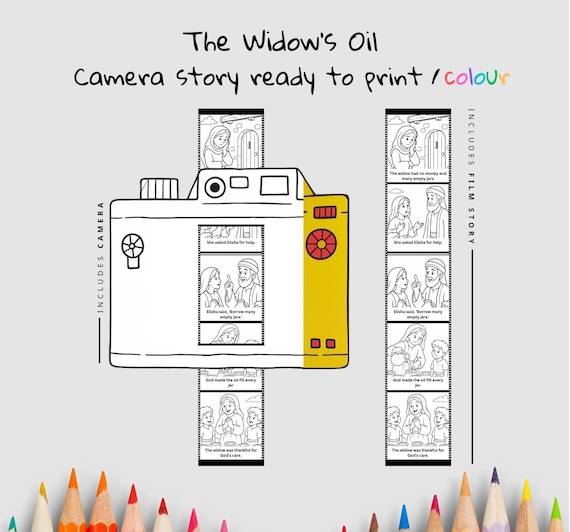
8 minChildren make simple sequence cards showing key moments: crying out, the pot of oil, borrowing containers, pouring, full containers and selling the oil. As they order the cards, ask them to say one sentence about each step from the passage. This keeps the response closely tied to what the text actually says.
2 Kings 4:1, 2 Kings 4:2, 2 Kings 4:3, 2 Kings 4:5, 2 Kings 4:7
Closing: What does this passage show?
3 minReview the learning goal. Ask children to retell the account in six short steps. Finish by noting that in this passage the widow brings her need, Elisha gives instructions, the family acts, and the outcome is enough oil to pay the debt and support the family. Invite a brief thankful response.
2 Kings 4:1, 2 Kings 4:3, 2 Kings 4:5, 2 Kings 4:7
Questions to explore
What problem does the widow bring to Elisha at the beginning of the account?
Look closely at what she says about her husband, the creditor and her two children.
2 Kings 4:1
Why is it important that Elisha says, ‘Don’t borrow just a few containers’?
Use the later verses to connect the number of containers with what happened as the oil was poured.
2 Kings 4:3, 2 Kings 4:6
What changed from the start of the passage to the end?
Compare the widow’s danger and debt at the beginning with Elisha’s final instruction about selling the oil, paying the debt and living on the rest.
2 Kings 4:1, 2 Kings 4:7
Make, think or respond
Jar Sequence Cards
What you’ll need
- Plain paper or card
- Pencils or textas
- Scissors
- A small bottle or drawing of a jar
Try it together
- Draw six simple pictures from the account: the widow asking for help, a pot of oil, borrowed containers, pouring oil, full containers and selling the oil.
- Cut the pictures into separate cards.
- Mix the cards up and work in pairs to place them in the right order.
- Retell the account using one sentence for each card.
- If time allows, write one key word under each card such as help, oil, borrow, pour, full, sell.
This activity helps children sequence the events of 2 Kings 4:1–7 and connect each action with its outcome in the passage.
Adapt for your group
- For younger children, provide the six picture ideas already listed on the board and let them draw only four main moments instead of six.
- For older or more confident children, ask them to add a short caption with the exact action from the passage for each card.
An optional closing prayer
You may pray: “God, thank you for this account. Please help us listen carefully to your word, bring our needs honestly, and remember what you have shown in this passage.”
Read the Bible passage World English Bible Classic
2 Kings 4
1 Now a certain woman of the wives of the sons of the prophets cried out to Elisha, saying, “Your servant my husband is dead. You know that your servant feared Yahweh. Now the creditor has come to take for himself my two children to be slaves.”
2 Elisha said to her, “What should I do for you? Tell me, what do you have in the house?” She said, “Your servant has nothing in the house, except a pot of oil.”
3 Then he said, “Go, borrow empty containers from all your neighbors. Don’t borrow just a few containers.
4 Go in and shut the door on you and on your sons, and pour oil into all those containers; and set aside those which are full.”
5 So she went from him, and shut the door on herself and on her sons. They brought the containers to her, and she poured oil.
6 When the containers were full, she said to her son, “Bring me another container.” He said to her, “There isn’t another container.” Then the oil stopped flowing.
7 Then she came and told the man of God. He said, “Go, sell the oil, and pay your debt; and you and your sons live on the rest.”
World English Bible Classic. Public domain.
Source passages
Something to make together
These activities connect with the passage. Choose one that suits your group and the time you have.