Assembly video coming soon.
We’ll add a step-by-step demonstration here.
Photos from the Etsy listing. View original Etsy listing ↗
Bible chatterbox
Parables of Jesus Bible Chatterbox
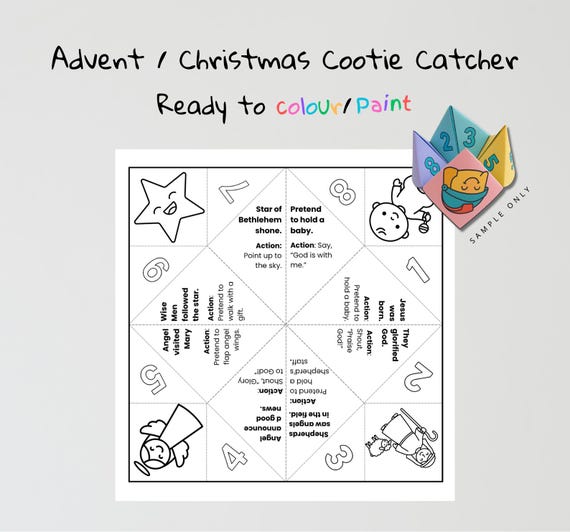
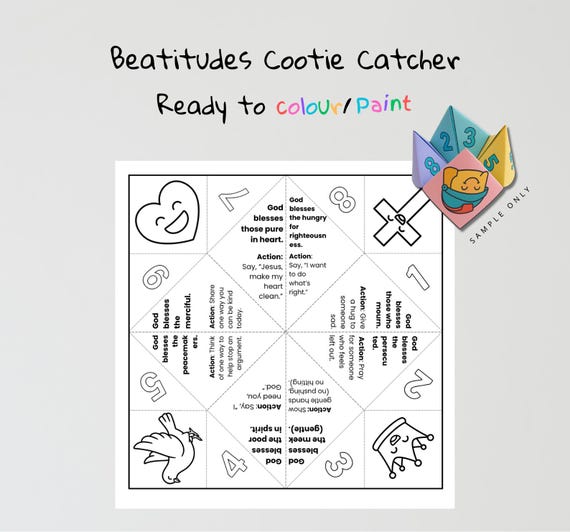
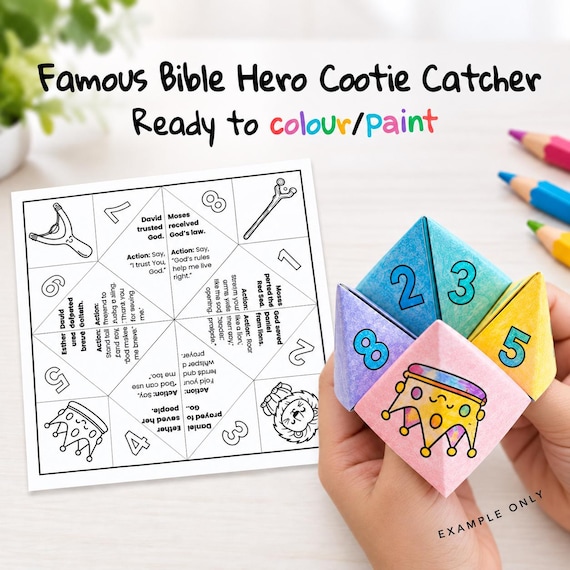
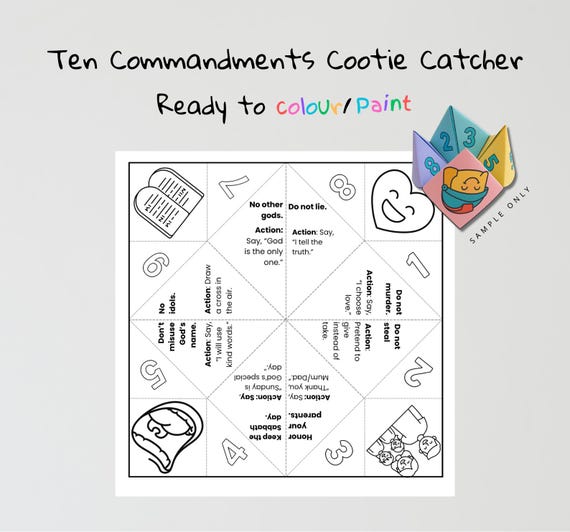
A printable paper chatterbox game based on Parables of Jesus. Children colour, cut and fold the paper game, then open its flaps to explore the prompts. Explore how Jesus used everyday stories to teach kindness, forgiveness, faith and wise choices.
- Suggested ages
- 7–12 years
- Activity time
- 20–35 min
- Difficulty
- Moderate
English
Age, time and difficulty are planning guides. Check the preparation notes for adult help.
$4.15 USD
One-time purchase
Digital download · No physical item shipped
What’s included
- A4 Sized for Easy Classroom or Home Printing
- Features 8 of Jesus’ Parables with Actions & Reflection Prompts
- Each flap introduces a parable and its message, helping children understand the values of kindness, forgiveness, and faith through short, memorable prompts that make scripture come alive.
Your download files
- ParablesofJesus.pdf: 1 page
- Instructions-CootieCatcher.pdf: 1 page
File inventory and page counts checked against the originals. Page counts include any instruction pages. Please check the preparation notes before printing for a group.
Getting ready
Age & adult help
Multiple origami folds, finger control and written prompts make this more demanding than a simple cut-out.
Demonstrate the folding and opening mechanism. An adult can pre-fold the game and read prompts for younger participants.
What you’ll need
Printer, paper, colouring pencils or crayons, scissors. A ruler can help make neat folds.
Time & preparation
One chatterbox, including colouring and folding. Play and teaching time are additional.
Age is an editorial estimate for the motor and reading demands of this format. Difficulty, completion time and suggested tools are planning estimates, not build-tested.
Check the file before you print for a group, and allow for any extra help the kids might need.
Printing tipsThe story behind the craft
Suggested Bible reading: Luke 10:25–37; Luke 15; Matthew 7:24–27; 13:1–32
The parable prompts draw on different stories, including the Samaritan, lost sheep, returning son, sower, mustard seed and houses on rock and sand. Each image belongs to its own teaching context.
Main takeaway: Jesus’ parables invite careful listening and a response that reaches daily life.
While you fold and play
Open one flap at a time and read its prompt before moving on.
Read the selected parable before responding to its short prompt. Compare one named action, such as helping or welcoming, with the meaning in the full story.
An adult can read a prompt and accept a spoken or drawn response. Confident readers can locate the relevant passage before explaining the prompt.
Questions to explore
- Which parable does this prompt name?
- What choice or surprise is central to that story?
- What would applying that particular teaching look like?
Common questions
What files are included in this download?
The download contains 2 PDFs with 2 pages in total: ParablesofJesus.pdf (1 page); Instructions-CootieCatcher.pdf (1 page). This is the English edition. You print the files yourself; physical supplies are not included.
How does this chatterbox work?
Colour the square, cut around its outside edge and fold it into finger pockets. Open and close the folds, then reveal and read a prompt under a flap. For a Bible reading to accompany this activity, use Luke 10:25–37; Luke 15; Matthew 7:24–27; 13:1–32.
Which pages should I print, and at what size?
The original PDF pages are A4 portrait. ParablesofJesus.pdf: print the page for each learner or group. Instructions-CootieCatcher.pdf: keep as a shared assembly guide. Print single-sided. On US Letter paper, select Letter and Fit or shrink to the printable area; the originals are not separate Letter-sized files.
What supplies and preparation does this need?
Paper, colouring pencils and scissors. Make the folds before playing; glue and a screen are not needed.
What help might children need with this activity?
Suggested ages: 7–12 years. Demonstrate the folding and opening mechanism. An adult can pre-fold the game and read prompts for younger participants. Adjust this guide for the child’s reading and making skills.
Reviews
No reviews yet. Made this craft? Tell us how it went.