Assembly video coming soon.
We’ll add a step-by-step demonstration here.
Photos from the Etsy listing. View original Etsy listing ↗
Bible sequencing craft
The Empty Tomb Bible Sequencing Craft
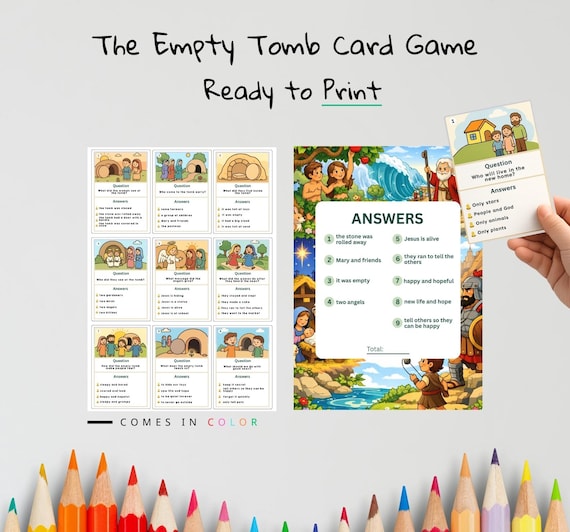
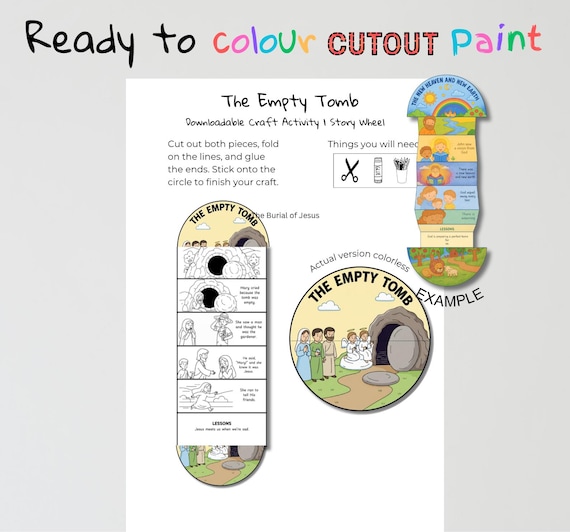
A printable Bible sequencing craft based on The Empty Tomb. Children colour and fold the illustrated sections to retell the events in order. Story focus: Women go to Jesus’ tomb early. The tomb is empty. Jesus is risen. He is alive!
- Suggested ages
- 6–10 years
- Activity time
- 20–35 min
- Difficulty
- Easy–moderate
English
Age, time and difficulty are planning guides. Check the preparation notes for adult help.
$4.15 USD
One-time purchase
Digital download · No physical item shipped
What’s included
- Printable sequencing design for colouring and folding
- 5 numbered story sections (listed as “Page 1” onward; physical PDF page count unverified)
- Scenes stated in the listing: Women go to Jesus’ tomb early; They see the stone rolled away; The tomb is empty; Angels say, “He is not here.”; Jesus is risen. He is alive!
Your download files
- TheEmptyTomb_John20_.pdf: 2 pages
File inventory and page counts checked against the originals. Page counts include any instruction pages. Please check the preparation notes before printing for a group.
Getting ready
Age & adult help
Children need to follow the pictured events and make the folds used to retell them.
Prepare awkward cuts, demonstrate the folds and read captions aloud. Use the pictures for shared retelling.
What you’ll need
Printer, paper, colouring pencils or crayons, scissors. Glue or tape may be useful if separate sections need joining.
Time & preparation
One sequencing craft, including colouring and folding. Discussion time is additional.
Age is an editorial estimate for the motor and reading demands of this format. Difficulty, completion time and suggested tools are planning estimates, not build-tested.
Check the file before you print for a group, and allow for any extra help the kids might need.
Printing tipsThe story behind the craft
Bible passage: John 20:1–18
Mary Magdalene finds Jesus’ tomb open and later remains outside weeping. At first she does not recognise Jesus; when he calls her by name, she recognises him and goes to tell the disciples.
Main takeaway: Mary’s encounter moves from grief to recognition and sharing the resurrection news.
As you put the story in order
Read the story sections before attaching them, then use the finished sequence to explain what changes.
Pause at the question about why Mary is weeping and at Jesus speaking her name. Keep her experience distinct from a general summary of every Easter account.
Younger learners can choose what happens first and next. Older learners can explain why a turning point changes the story.
Questions to explore
- Why was Mary crying?
- What helped her recognise Jesus?
- What message did she take to the disciples?
Common questions
What files are included in this download?
The download is a 2-page PDF: TheEmptyTomb_John20_.pdf. This is the English edition. You print the files yourself; physical supplies are not included.
How do I fold the five story panels?
Colour the numbered story sheet. Fold upwards on the dotted line with the pictures outside, fold the left and right sides towards the centre, then fold the cover and panel 5 as shown in the illustrated guide. This is a folded picture book, rather than five separate PDF pages. The pictured scenes include: Women go to Jesus’ tomb early; They see the stone rolled away; The tomb is empty; Angels say, “He is not here.”; Jesus is risen. He is alive!.
Which pages should I print, and at what size?
The original PDF pages are A4 landscape. TheEmptyTomb_John20_.pdf: print page 2 for each learner or group. Page 1 is the assembly guide, which can be shared. Print single-sided. On US Letter paper, select Letter and Fit or shrink to the printable area; the originals are not separate Letter-sized files.
What supplies and preparation does this need?
Paper and colouring pencils. An adult can demonstrate the centre folds and read the five panels aloud. The supplied method uses folding rather than glued-on picture strips.
What help might children need with this activity?
The main demands are following five pictured events and making the centre folds. Demonstrate the folding and read the captions aloud for children who need help. Younger children can colour and retell using a book an adult has folded.
Reviews
No reviews yet. Made this craft? Tell us how it went.