Lesson sequence
Esther: The Palace, Mordecai and Haman's Plot
Esther 1:1–2:20; Esther (Greek) 1:1; Esther 2:21–23; Esther 3:1–15
After Queen Vashti was removed, a young Jewish woman named Esther was taken to the palace and made queen. This lesson also brings together Mordecai's Dream in Greek Esther, Mordecai Uncovers a Palace Plot, Haman Plots against the Jews.
Before you teach
King Ahasuerus ruled from India to Ethiopia over 127 provinces, and he sat on his throne in Susa. In the third year of his reign he held great feasts. First he displayed the riches of his kingdom for 180 days. Then he gave a seven-day feast in the palace garden court for all the people present in Susa, both great and small. Queen Vashti also gave a feast for the women in the royal house. On the seventh day, when the king was merry with wine, he ordered seven eunuchs…
Explain the central teaching of Esther: The Palace, Mordecai and Haman's Plot, using two details from the reading. After Queen Vashti was removed, a young Jewish woman named Esther was taken to the palace and made queen. In the additional opening of Greek Esther, Mordecai sees a disturbing vision and then uncovers a plot inside the palace. Mordecai learns of a plot against the king, and the warning reaches the palace through Esther. One man’s refusal to bow became the excuse for a cruel plan against Jewish people across the empire.
Your lesson sequence
Use the teaching outline below for each session, with these reading and activity choices.
Esther Becomes Queen
Esther 1:1–2:20
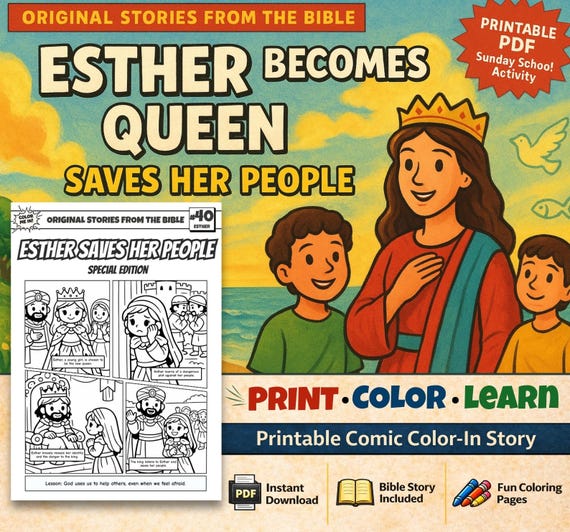
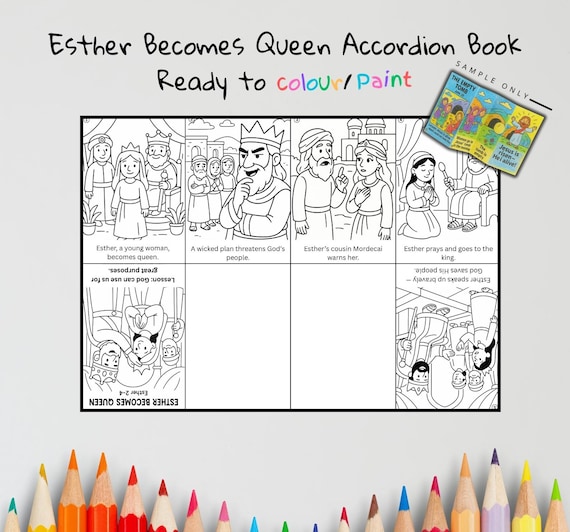
After Queen Vashti was removed, a young Jewish woman named Esther was taken to the palace and made queen.
Try together: Use the evidence sheet for Esther 1:1–2:20. Record key details, compare the opening and closing of this reading, and prepare a short explanation with a supporting Bible reference for each point.
Mordecai's Dream in Greek Esther
Esther (Greek) 1:1
In the additional opening of Greek Esther, Mordecai sees a disturbing vision and then uncovers a plot inside the palace.
Try together: Use the evidence sheet for Esther (Greek) 1:1. Record key details, compare the opening and closing of this reading, and prepare a short explanation with a supporting Bible reference for each point.
Mordecai Uncovers a Palace Plot
Esther 2:21–23
Mordecai learns of a plot against the king, and the warning reaches the palace through Esther.
Try together: Use the evidence sheet for Esther 2:21–23. Record key details, compare the opening and closing of this reading, and prepare a short explanation with a supporting Bible reference for each point.
Haman Plots against the Jews
Esther 3:1–15
One man’s refusal to bow became the excuse for a cruel plan against Jewish people across the empire.
Try together: Use the evidence sheet for Esther 3:1–15. Record key details, compare the opening and closing of this reading, and prepare a short explanation with a supporting Bible reference for each point.
Welcome: Esther: The Palace, Mordecai and Haman's Plot
5 minIntroduce “Esther Becomes Queen”, “Mordecai's Dream in Greek Esther”, “Mordecai Uncovers a Palace Plot”, “Haman Plots against the Jews” and locate Esther 1:1–2:20; Esther (Greek) 1:1; Esther 2:21–23; Esther 3:1–15. After Queen Vashti was removed, a young Jewish woman named Esther was taken to the palace and made queen. Invite each learner to name a detail or question they will listen for. Choose the reading for today’s session from the sequence above.
Esther 1:1, Esther 1:22, Esther 2:20
Read and explain the passage
12 minEsther Becomes Queen (Esther 1:1–2:20): King Ahasuerus ruled from India to Ethiopia over 127 provinces, and he sat on his throne in Susa. In the third year of his reign he held great feasts. First he displayed the riches of his kingdom for 180 days. Then he gave a seven-day feast in the palace garden court for all the people present in Susa, both great and small. Queen Vashti also gave a feast for the women in the royal house.
Mordecai's Dream in Greek Esther (Esther (Greek) 1:1): In the additional Greek opening of Esther, Mordecai is introduced at once. He is a Jew from the tribe of Benjamin, living in Susa and serving in the king’s palace. The passage places this on the first day of Nisan in the second year of King Ahasuerus.
Mordecai Uncovers a Palace Plot (Esther 2:21–23): In those days, Mordecai was sitting in the king’s gate. Two of the king’s eunuchs, Bigthan and Teresh, were doorkeepers. They became angry and sought to lay hands on King Ahasuerus.
Haman Plots against the Jews (Esther 3:1–15): King Ahasuerus promoted Haman son of Hammedatha the Agagite and gave him a place higher than the other royal officials. The king had commanded his servants at the gate to bow down and pay homage to Haman, but Mordecai would not do it.
Read the selected verses together, pausing at “Esther Becomes Queen”, “Mordecai's Dream in Greek Esther”, “Mordecai Uncovers a Palace Plot”, “Haman Plots against the Jews”. Use the source reading below and check the explanation against the words of the passage.
Esther 1:5, Esther 1:2, Esther 1:9, Esther (Greek) 1:1, Esther 2:21, Esther 2:22, Esther 2:23, Esther 3:2, Esther 3:1, Esther 3:5
Discuss the details and their meaning
8 minUse the three questions below. Begin with ““On the seventh day, when the king was merry with wine, he ordered seven eunuchs to bring Queen Vashti before him wearing the royal crown, so others could look at her beauty.” Which details explain how the account reaches this point?” and allow time to find the supporting verses. One man’s refusal to bow became the excuse for a cruel plan against Jewish people across the empire. Ask learners to explain which details support their answer and to identify a question they would like to explore further.
Esther 1:11, Esther 1:12, Esther 1:19, Esther 2:23, Esther 2:21, Esther 2:22, Esther 3:4, Esther 3:3, Esther 3:2
Make and respond: Choices and outcomes evidence map
12 minWork on “Esther: The Palace, Mordecai and Haman's Plot: Choices and outcomes evidence map”. Follow the materials and steps below, using “Esther Becomes Queen”, “Mordecai's Dream in Greek Esther”, “Mordecai Uncovers a Palace Plot”, “Haman Plots against the Jews” as reading headings. Each learner should include at least two accurate details and their verse references. Share one observation from the finished sheet and explain how it connects with the central teaching.
Esther 1:1, Esther 2:9, Esther 3:15
Closing: return to Haman Plots against the Jews
3 minRevisit Esther 3:1–15. Invite a learner to summarise what the group has learned about Haman Plots against the Jews and another to support the summary with a verse. Give learners a moment to complete their response sheet. They can share a question or, if appropriate for the group, join the optional prayer.
Esther 3:1, Esther 3:8, Esther 3:15
Questions to explore
“On the seventh day, when the king was merry with wine, he ordered seven eunuchs to bring Queen Vashti before him wearing the royal crown, so others could look at her beauty.” Which details explain how the account reaches this point?
On the seventh day, when the king was merry with wine, he ordered seven eunuchs to bring Queen Vashti before him wearing the royal crown, so others could look at her beauty. Vashti refused to come. The king grew very angry and asked his advisers what should be done according to law. Memucan advised that Vashti should never again come before the king, and that…
Esther 1:11, Esther 1:12, Esther 1:19
“After that, the matter was written in the book of the chronicles in the king’s presence.” How does this ending connect with the beginning?
After that, the matter was written in the book of the chronicles in the king’s presence. The warning, the investigation, and the outcome were all recorded before the king.
Esther 2:23, Esther 2:21, Esther 2:22
“The king’s servants at the gate kept asking Mordecai why he disobeyed the king’s command.” Which details explain how the account reaches this point?
The king’s servants at the gate kept asking Mordecai why he disobeyed the king’s command. Day after day they spoke to him, but he would not listen. Then they told Haman, because Mordecai had said that he was a Jew.
Esther 3:4, Esther 3:3, Esther 3:2
Make, think or respond
Esther: The Palace, Mordecai and Haman's Plot: Choices and outcomes evidence map
What you’ll need
- plain paper or card
- pencils or pens
- a Bible or the source reading on this page
Try it together
- Fold a sheet into three panels or draw three columns. Label them “Words or actions”, “What happens next”, “Verse reference”.
- Read Esther 1:1–2:20; Esther (Greek) 1:1; Esther 2:21–23; Esther 3:1–15. Use “Esther Becomes Queen”, “Mordecai's Dream in Greek Esther”, “Mordecai Uncovers a Palace Plot”, “Haman Plots against the Jews” as your reading headings and add a short quotation or detail with its verse reference to each panel.
- Compare your notes with a partner. Check that every quotation is accurate and every conclusion has support in the passage.
- Compare two actions or statements in the account and explain their different outcomes.
The finished sheet keeps the details of Esther: The Palace, Mordecai and Haman's Plot connected to their Bible references and gives the group a way to explain what they noticed.
Adapt for your group
- For learners who need more support, prepare the reading headings “Esther Becomes Queen”, “Mordecai's Dream in Greek Esther”, “Mordecai Uncovers a Palace Plot”, “Haman Plots against the Jews” and let them match short quotations to the correct heading.
- For confident readers, compare two sections of Esther 1:1–2:20; Esther (Greek) 1:1; Esther 2:21–23; Esther 3:1–15. Ask for a written explanation with two supporting references and one question that the text leaves open.
An optional closing prayer
“God, help us listen carefully as we read Esther 1:1–2:20; Esther (Greek) 1:1; Esther 2:21–23; Esther 3:1–15. Help us understand what we have read, ask thoughtful questions and respond with care for others. Amen.”
Read the Bible passage World English Bible Classic
Esther 1
1 Now in the days of Ahasuerus (this is Ahasuerus who reigned from India even to Ethiopia, over one hundred twenty-seven provinces),
2 in those days, when the King Ahasuerus sat on the throne of his kingdom, which was in Susa the palace,
3 in the third year of his reign, he made a feast for all his princes and his servants; the army of Persia and Media, the nobles and princes of the provinces being before him.
4 He displayed the riches of his glorious kingdom and the honor of his excellent majesty many days, even one hundred eighty days.
5 When these days were fulfilled, the king made a seven day feast for all the people who were present in Susa the palace, both great and small, in the court of the garden of the king’s palace.
6 There were hangings of white and blue material, fastened with cords of fine linen and purple to silver rings and marble pillars. The couches were of gold and silver, on a pavement of red, white, yellow, and black marble.
7 They gave them drinks in golden vessels of various kinds, including royal wine in abundance, according to the bounty of the king.
8 In accordance with the law, the drinking was not compulsory; for so the king had instructed all the officials of his house, that they should do according to every man’s pleasure.
9 Also Vashti the queen made a feast for the women in the royal house which belonged to King Ahasuerus.
10 On the seventh day, when the heart of the king was merry with wine, he commanded Mehuman, Biztha, Harbona, Bigtha, and Abagtha, Zethar, and Carcass, the seven eunuchs who served in the presence of Ahasuerus the king,
11 to bring Vashti the queen before the king wearing the royal crown, to show the people and the princes her beauty; for she was beautiful.
12 But the queen Vashti refused to come at the king’s commandment by the eunuchs. Therefore the king was very angry, and his anger burned in him.
13 Then the king said to the wise men, who knew the times (for it was the king’s custom to consult those who knew law and judgment;
14 and next to him were Carshena, Shethar, Admatha, Tarshish, Meres, Marsena, and Memucan, the seven princes of Persia and Media, who saw the king’s face, and sat first in the kingdom),
15 “What shall we do to Queen Vashti according to law, because she has not done the bidding of the King Ahasuerus by the eunuchs?”
16 Memucan answered before the king and the princes, “Vashti the queen has not done wrong to just the king, but also to all the princes, and to all the people who are in all the provinces of the King Ahasuerus.
17 For this deed of the queen will become known to all women, causing them to show contempt for their husbands when it is reported, ‘King Ahasuerus commanded Vashti the queen to be brought in before him, but she didn’t come.’
18 Today, the princesses of Persia and Media who have heard of the queen’s deed will tell all the king’s princes. This will cause much contempt and wrath.
19 “If it pleases the king, let a royal commandment go from him, and let it be written among the laws of the Persians and the Medes, so that it cannot be altered, that Vashti may never again come before King Ahasuerus; and let the king give her royal estate to another who is better than she.
20 When the king’s decree which he shall make is published throughout all his kingdom (for it is great), all the wives will give their husbands honor, both great and small.”
21 This advice pleased the king and the princes, and the king did according to the word of Memucan:
22 for he sent letters into all the king’s provinces, into every province according to its writing, and to every people in their language, that every man should rule his own house, speaking in the language of his own people.
Esther 2
1 After these things, when the wrath of King Ahasuerus was pacified, he remembered Vashti, and what she had done, and what was decreed against her.
2 Then the king’s servants who served him said, “Let beautiful young virgins be sought for the king.
3 Let the king appoint officers in all the provinces of his kingdom, that they may gather together all the beautiful young virgins to the citadel of Susa, to the women’s house, to the custody of Hegai the king’s eunuch, keeper of the women. Let cosmetics be given them;
4 and let the maiden who pleases the king be queen instead of Vashti.” The thing pleased the king, and he did so.
5 There was a certain Jew in the citadel of Susa whose name was Mordecai, the son of Jair, the son of Shimei, the son of Kish, a Benjamite,
6 who had been carried away from Jerusalem with the captives who had been carried away with Jeconiah king of Judah, whom Nebuchadnezzar the king of Babylon had carried away.
7 He brought up Hadassah, that is, Esther, his uncle’s daughter; for she had neither father nor mother. The maiden was fair and beautiful; and when her father and mother were dead, Mordecai took her for his own daughter.
8 So, when the king’s commandment and his decree was heard, and when many maidens were gathered together to the citadel of Susa, to the custody of Hegai, Esther was taken into the king’s house, to the custody of Hegai, keeper of the women.
9 The maiden pleased him, and she obtained kindness from him. He quickly gave her cosmetics and her portions of food, and the seven choice maidens who were to be given her out of the king’s house. He moved her and her maidens to the best place in the women’s house.
10 Esther had not made known her people nor her relatives, because Mordecai had instructed her that she should not make it known.
11 Mordecai walked every day in front of the court of the women’s house, to find out how Esther was doing, and what would become of her.
12 Each young woman’s turn came to go in to King Ahasuerus after her purification for twelve months (for so were the days of their purification accomplished, six months with oil of myrrh, and six months with sweet fragrances and with preparations for beautifying women).
13 The young woman then came to the king like this: whatever she desired was given her to go with her out of the women’s house to the king’s house.
14 In the evening she went, and on the next day she returned into the second women’s house, to the custody of Shaashgaz, the king’s eunuch, who kept the concubines. She came in to the king no more, unless the king delighted in her, and she was called by name.
15 Now when the turn of Esther, the daughter of Abihail the uncle of Mordecai, who had taken her for his daughter, came to go in to the king, she required nothing but what Hegai the king’s eunuch, the keeper of the women, advised. Esther obtained favor in the sight of all those who looked at her.
16 So Esther was taken to King Ahasuerus into his royal house in the tenth month, which is the month Tebeth, in the seventh year of his reign.
17 The king loved Esther more than all the women, and she obtained favor and kindness in his sight more than all the virgins; so that he set the royal crown on her head, and made her queen instead of Vashti.
18 Then the king made a great feast for all his princes and his servants, even Esther’s feast; and he proclaimed a holiday in the provinces, and gave gifts according to the king’s bounty.
19 When the virgins were gathered together the second time, Mordecai was sitting in the king’s gate.
20 Esther had not yet made known her relatives nor her people, as Mordecai had commanded her; for Esther obeyed Mordecai, like she did when she was brought up by him.
Esther (Greek) 1
1 [In the second year of the reign of Ahasuerus the great king, on the first day of Nisan, Mordecai the son of Jair, the son of Shimei, the son of Kish, of the tribe of Benjamin, a Jew dwelling in the city Susa, a great man, serving in the king’s palace, saw a vision. Now he was one of the captives whom Nebuchadnezzar king of Babylon had carried captive from Jerusalem with Jeconiah the king of Judea. This was his dream: Behold, voices and a noise, thunders and earthquake, tumult upon the earth. And, behold, two great serpents came out, both ready for conflict. A great voice came from them. Every nation was prepared for battle by their voice, even to fight against the nation of the just. Behold, a day of darkness and blackness, suffering and anguish, affection and tumult upon the earth. And all the righteous nation was troubled, fearing their own afflictions. They prepared to die, and cried to God. Something like a great river from a little spring with much water, came from their cry. Light and the sun arose, and the lowly were exalted, and devoured the honorable. Mordecai, who had seen this vision and what God desired to do, having arisen, kept it in his heart, and desired by all means to interpret it, even until night. Mordecai rested quietly in the palace with Gabatha and Tharrha the king’s two chamberlains, eunuchs who guarded the palace. He heard their conversation and searched out their plans. He learned that they were preparing to lay hands on King Ahasuerus; and he informed the king concerning them. The king examined the two chamberlains. They confessed, and were led away and executed. The king wrote these things for a record. Mordecai also wrote concerning these matters. The king commanded Mordecai to serve in the palace, and gave gifts for this service. But Haman the son of Hammedatha the Bougean was honored in the sight of the king, and he endeavored to harm Mordecai and his people, because of the king’s two chamberlains.] And it came to pass after these things in the days of Ahasuerus, —(this Ahasuerus ruled over one hundred twenty-seven provinces from India)—
Esther 2
21 In those days, while Mordecai was sitting in the king’s gate, two of the king’s eunuchs, Bigthan and Teresh, who were doorkeepers, were angry, and sought to lay hands on the King Ahasuerus.
22 This thing became known to Mordecai, who informed Esther the queen; and Esther informed the king in Mordecai’s name.
23 When this matter was investigated, and it was found to be so, they were both hanged on a gallows; and it was written in the book of the chronicles in the king’s presence.
Esther 3
1 After these things King Ahasuerus promoted Haman the son of Hammedatha the Agagite, and advanced him, and set his seat above all the princes who were with him.
2 All the king’s servants who were in the king’s gate bowed down and paid homage to Haman, for the king had so commanded concerning him. But Mordecai didn’t bow down or pay him homage.
3 Then the king’s servants who were in the king’s gate said to Mordecai, “Why do you disobey the king’s commandment?”
4 Now it came to pass, when they spoke daily to him, and he didn’t listen to them, that they told Haman, to see whether Mordecai’s reason would stand; for he had told them that he was a Jew.
5 When Haman saw that Mordecai didn’t bow down nor pay him homage, Haman was full of wrath.
6 But he scorned the thought of laying hands on Mordecai alone, for they had made known to him Mordecai’s people. Therefore Haman sought to destroy all the Jews who were throughout the whole kingdom of Ahasuerus, even Mordecai’s people.
7 In the first month, which is the month Nisan, in the twelfth year of King Ahasuerus, they cast Pur, that is, the lot, before Haman from day to day, and from month to month, and chose the twelfth month, which is the month Adar.
8 Haman said to King Ahasuerus, “There is a certain people scattered abroad and dispersed among the peoples in all the provinces of your kingdom, and their laws are different from other people’s. They don’t keep the king’s laws. Therefore it is not for the king’s profit to allow them to remain.
9 If it pleases the king, let it be written that they be destroyed; and I will pay ten thousand talents of silver into the hands of those who are in charge of the king’s business, to bring it into the king’s treasuries.”
10 The king took his ring from his hand, and gave it to Haman the son of Hammedatha the Agagite, the Jews’ enemy.
11 The king said to Haman, “The silver is given to you, the people also, to do with them as it seems good to you.”
12 Then the king’s scribes were called in on the first month, on the thirteenth day of the month; and all that Haman commanded was written to the king’s local governors, and to the governors who were over every province, and to the princes of every people, to every province according to its writing, and to every people in their language. It was written in the name of King Ahasuerus, and it was sealed with the king’s ring.
13 Letters were sent by couriers into all the king’s provinces, to destroy, to kill, and to cause to perish, all Jews, both young and old, little children and women, in one day, even on the thirteenth day of the twelfth month, which is the month Adar, and to plunder their possessions.
14 A copy of the letter, that the decree should be given out in every province, was published to all the peoples, that they should be ready against that day.
15 The couriers went out in haste by the king’s commandment, and the decree was given out in the citadel of Susa. The king and Haman sat down to drink; but the city of Susa was perplexed.
World English Bible Classic. Public domain.
Source passages
Other Scripture references
Esther (Greek) 1:2–2:20; Esther (Greek) 1:1; Esther 2:21–23 Esther (Greek) 2:21–23; Esther 3:1–15 Esther (Greek) 3:1–12
Something to make together
These activities connect with the passage. Choose one that suits your group and the time you have.