Single lesson
Jesus the Good Shepherd
John 10:1–21
In John 10:1–21, Jesus uses a picture of sheep, a shepherd and a door to teach who he is. Children can learn how his words show care, safety and life, and why people responded to him differently.
Before you teach
This passage begins with a parable that Jesus’ listeners did not understand, so he explains it further. He calls himself both the sheep’s door and the good shepherd, then the passage ends by showing that his words caused division among the Jews.
Students will be able to identify two names Jesus gives himself in John 10:1–21 and explain one way those names show his care for his people.
Welcome: Listen for repeated words
4 minAsk children to listen for repeated ideas as John 10:1–21 is read aloud. Tell them this passage is called a parable in verse 6, so Jesus is using a word picture. Invite them to notice who is safe, who is trusted and what Jesus says about himself.
John 10:6, John 10:7, John 10:11
Read and explain: The shepherd, the sheep and the door
8 minRead John 10:1–10 in small parts. Explain that the shepherd enters by the door, the sheep know his voice and follow him, but they do not follow strangers. Then notice that Jesus explains the picture by saying, “I am the sheep’s door” and “I am the door”, linking himself with safety and pasture.
John 10:2, John 10:3, John 10:4, John 10:5, John 10:7, John 10:9
Discuss: Why is Jesus called the good shepherd?
7 minRead John 10:11–18. Help children see the contrast between the good shepherd and the hired hand. The hired hand runs away, but Jesus says twice that he lays down his life for the sheep. He also says he knows his own and that other sheep will hear his voice and become one flock.
John 10:11, John 10:12, John 10:13, John 10:14, John 10:15, John 10:16, John 10:18
Make and respond: Reminder card
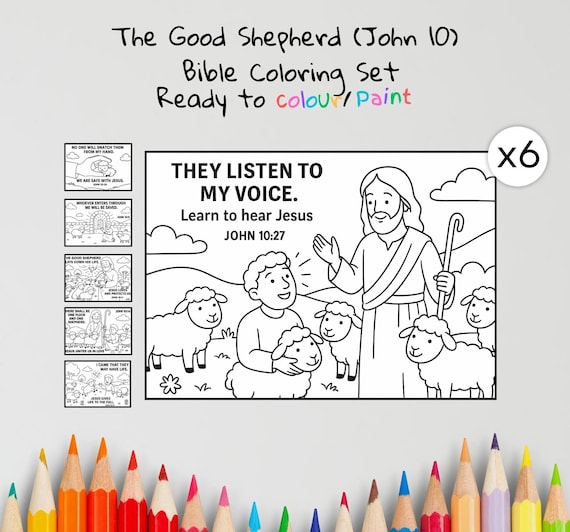
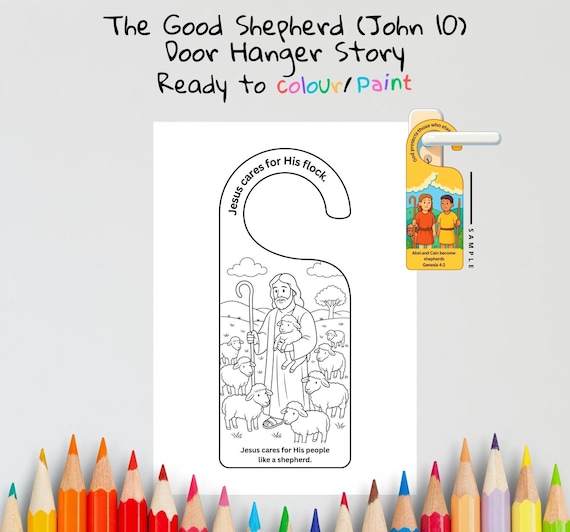
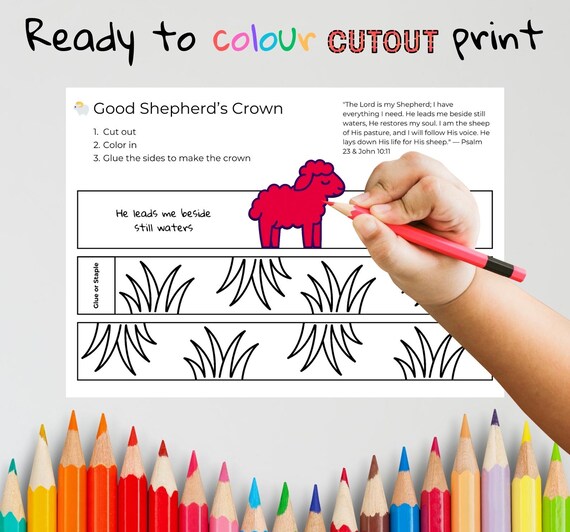
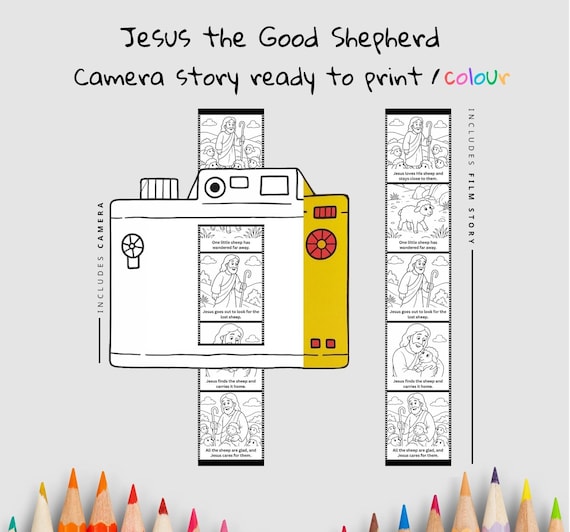
7 minChildren choose one key verse or short phrase from the passage and make a small reminder card. Encourage them to draw a door, a shepherd’s staff or a flock, then write one sentence explaining what the verse teaches about Jesus. Share examples of how remembering Jesus’ words can help us trust his care.
John 10:9, John 10:11, John 10:14, John 10:16
Closing: Different responses to Jesus
4 minFinish with John 10:19–21. Point out that people did not all react the same way to Jesus’ words. Some rejected him, while others pointed to what he had done. Invite children to say one true thing they learned about Jesus from this passage and one verse they want to remember.
John 10:19, John 10:20, John 10:21
Questions to explore
What does Jesus mean when he says, “I am the door”?
Guide children to answer from the text: through Jesus there is saving, going in and out, and finding pasture, so he is presented as the way to safety and life for the sheep.
John 10:7, John 10:9, John 10:10
How is the good shepherd different from the hired hand in this passage?
Help them compare the verses carefully: the hired hand flees and leaves the sheep, but Jesus says the good shepherd lays down his life for the sheep.
John 10:11, John 10:12, John 10:13, John 10:15
Why do you think the passage ends by describing a division among the Jews?
Point children to the final verses, where some said Jesus was insane, while others said his words and works did not fit that claim.
John 10:19, John 10:20, John 10:21
Make, think or respond
Good Shepherd Reminder Card
What you’ll need
- Plain paper or card
- Pencils or pens
- Crayons or coloured pencils
- Optional scissors
Try it together
- Read aloud a key verse choice such as John 10:9, John 10:11, John 10:14 or John 10:16.
- Fold or cut paper into a small card size.
- On one side, draw a simple picture from the passage, such as a door, sheep or a shepherd’s staff.
- On the other side, write the chosen verse reference and one short sentence about what it teaches about Jesus.
- Invite each child to show the card and read their sentence aloud.
This activity helps children remember Jesus’ own words about being the door and the good shepherd in John 10:1–21.
Adapt for your group
- For younger children, offer two verse choices only and let them copy a short phrase such as “I am the good shepherd” or “I am the door”.
- For older or more confident children, ask them to include both titles, “door” and “good shepherd”, and explain how each one adds something different to the passage.
An optional closing prayer
You may pray: “Lord Jesus, thank you for teaching us that you are the good shepherd and the door. Please help us listen to your voice and remember your words. Amen.”
Read the Bible passage World English Bible Classic
John 10
1 “Most certainly, I tell you, one who doesn’t enter by the door into the sheep fold, but climbs up some other way, is a thief and a robber.
2 But one who enters in by the door is the shepherd of the sheep.
3 The gatekeeper opens the gate for him, and the sheep listen to his voice. He calls his own sheep by name and leads them out.
4 Whenever he brings out his own sheep, he goes before them; and the sheep follow him, for they know his voice.
5 They will by no means follow a stranger, but will flee from him; for they don’t know the voice of strangers.”
6 Jesus spoke this parable to them, but they didn’t understand what he was telling them.
7 Jesus therefore said to them again, “Most certainly, I tell you, I am the sheep’s door.
8 All who came before me are thieves and robbers, but the sheep didn’t listen to them.
9 I am the door. If anyone enters in by me, he will be saved, and will go in and go out and will find pasture.
10 The thief only comes to steal, kill, and destroy. I came that they may have life, and may have it abundantly.
11 “I am the good shepherd. The good shepherd lays down his life for the sheep.
12 He who is a hired hand, and not a shepherd, who doesn’t own the sheep, sees the wolf coming, leaves the sheep, and flees. The wolf snatches the sheep and scatters them.
13 The hired hand flees because he is a hired hand and doesn’t care for the sheep.
14 I am the good shepherd. I know my own, and I’m known by my own;
15 even as the Father knows me, and I know the Father. I lay down my life for the sheep.
16 I have other sheep which are not of this fold. I must bring them also, and they will hear my voice. They will become one flock with one shepherd.
17 Therefore the Father loves me, because I lay down my life, that I may take it again.
18 No one takes it away from me, but I lay it down by myself. I have power to lay it down, and I have power to take it again. I received this commandment from my Father.”
19 Therefore a division arose again among the Jews because of these words.
20 Many of them said, “He has a demon and is insane! Why do you listen to him?”
21 Others said, “These are not the sayings of one possessed by a demon. It isn’t possible for a demon to open the eyes of the blind, is it?”
World English Bible Classic. Public domain.
Source passages
Something to make together
These activities connect with the passage. Choose one that suits your group and the time you have.