Single lesson
Thomas Meets the Risen Jesus
John 20:24–29
This lesson helps children follow the order of Thomas meeting the risen Jesus and notice how Thomas moves from refusing to believe to confessing, “My Lord and my God!” It also helps them hear Jesus’ words about believing.
Before you teach
In this part of John’s Gospel, Thomas was absent when Jesus came to the disciples. The other disciples told Thomas, “We have seen the Lord!”, but Thomas said he would not believe unless he saw and touched Jesus’ wounds. Eight days later, Jesus came again while the disciples were inside, and Thomas was there.
Students will be able to retell John 20:24–29 in order and explain that Thomas moved from unbelief to belief when he met Jesus, and that Jesus spoke a blessing on those who believe without seeing.
Welcome: Who was missing?
5 minBegin by introducing the passage simply: Thomas was one of the twelve, but he was not there when Jesus first came to the disciples. Ask children to listen for what Thomas heard, what he said, and what happened when Jesus came again. This sets up the sequence of the story clearly.
John 20:24
Read and explain: Thomas’ choice
7 minRead verses 24–25 aloud. Explain that “Didymus” is another name for Thomas in this verse. Notice the strong words Thomas uses: he says that unless he sees the nail marks and puts his hand into Jesus’ side, he will not believe. The other disciples had told him, “We have seen the Lord!”
John 20:24, John 20:25
Discuss: Jesus comes and speaks to Thomas
6 minRead verses 26–27. Help children observe the order: after eight days, the disciples were inside, Thomas was with them, Jesus came though the doors were locked, and Jesus said, “Peace be to you.” Then Jesus addressed Thomas directly and repeated the kind of proof Thomas had asked for, telling him, “Don’t be unbelieving, but believing.”
John 20:26, John 20:27
Make and respond: Sequence the meeting
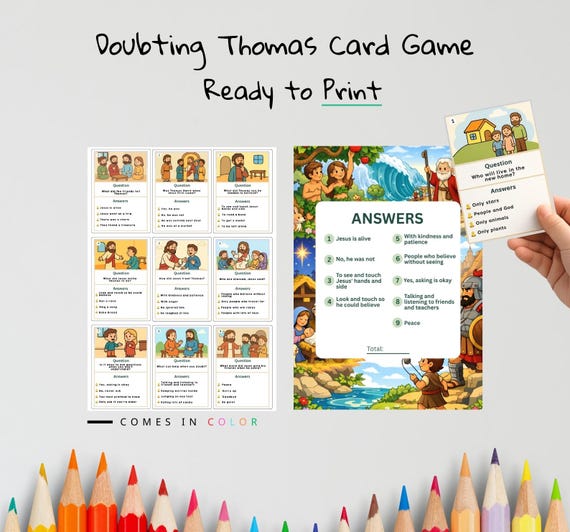
7 minChildren make simple sequence cards showing four moments: Thomas missing the first visit, the disciples reporting to Thomas, Jesus standing among them, and Thomas answering Jesus. As they arrange the cards, prompt them to say what changed for Thomas between verse 25 and verse 28.
John 20:24, John 20:25, John 20:26, John 20:28
Closing: What Jesus says about believing
5 minFinish by reading verses 28–29 again. Draw attention to Thomas’ words, “My Lord and my God!” Then notice Jesus’ response: Thomas believed because he had seen, and Jesus called those blessed who have not seen and yet have believed. Invite children to repeat the main idea of the passage in one sentence.
John 20:28, John 20:29
Questions to explore
What did Thomas say he needed before he would believe?
Look closely at Thomas’ own words about seeing Jesus’ hands and touching his side, and compare that with what the other disciples told him.
John 20:25
What did Jesus tell Thomas to do, and what did Jesus tell Thomas to become?
Read Jesus’ words carefully and notice both the invitation to see and touch, and the command about believing.
John 20:27
What did Thomas call Jesus when he answered him?
Use Thomas’ exact words, then connect them with Jesus’ statement about believing after seeing.
John 20:28, John 20:29
Make, think or respond
Thomas Story Sequence Cards
What you’ll need
- plain paper or card
- pencils or textas
- scissors
- Bible
Try it together
- Draw four simple pictures from the passage: Thomas absent, the disciples telling Thomas, Jesus standing in the middle, and Thomas answering Jesus.
- Cut out the pictures as cards.
- Mix the cards up and have the children place them in the order of John 20:24–29.
- Ask children to say one sentence for each card using words from the passage.
This activity helps children sequence the events of John 20:24–29 and notice Thomas’ change from unbelief to belief.
Adapt for your group
- For younger children, keep the sequence to three cards and have them repeat short phrases such as “We have seen the Lord” and “My Lord and my God!”.
- For older children, ask them to compare Thomas’ statement in John 20:25 with Jesus’ blessing in John 20:29 and explain the difference in a few sentences.
An optional closing prayer
You might pray: “Lord Jesus, thank you for this passage about Thomas. Please help us listen carefully to your words and grow in belief as we learn from what Thomas said and what you said.”
Read the Bible passage World English Bible Classic
John 20
24 But Thomas, one of the twelve, called Didymus, wasn’t with them when Jesus came.
25 The other disciples therefore said to him, “We have seen the Lord!” But he said to them, “Unless I see in his hands the print of the nails, put my finger into the print of the nails, and put my hand into his side, I will not believe.”
26 After eight days, again his disciples were inside and Thomas was with them. Jesus came, the doors being locked, and stood in the middle, and said, “Peace be to you.”
27 Then he said to Thomas, “Reach here your finger, and see my hands. Reach here your hand, and put it into my side. Don’t be unbelieving, but believing.”
28 Thomas answered him, “My Lord and my God!”
29 Jesus said to him, “Because you have seen me, you have believed. Blessed are those who have not seen and have believed.”
World English Bible Classic. Public domain.
Source passages
Something to make together
These activities connect with the passage. Choose one that suits your group and the time you have.